

Medical Disclaimer:
Homestead Health is a licensed medical cannabis processor and does not make medical claims. The information provided is for educational purposes only and is not a substitute for professional medical advice, diagnosis, or treatment. All persons must speak to a licensed, state-registered physician to be diagnosed and/or recommended medical cannabis for a qualifying medical condition in the state of alabama.
By Homestead Health – Alabama’s Leader in Pharmaceutical-Grade Medical Cannabis Processing
Understanding the Body’s Homeostatic Master Regulator
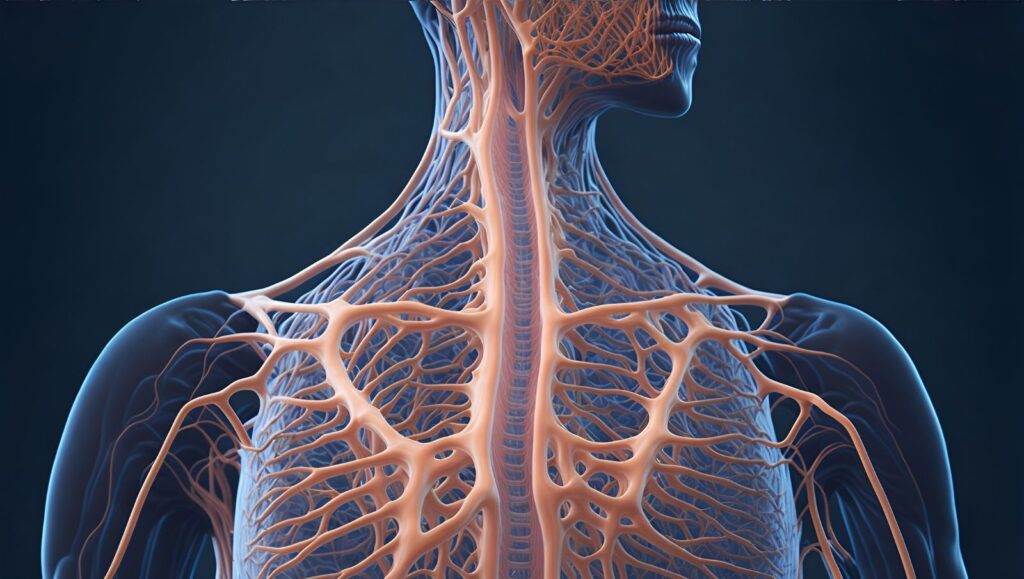
The endocannabinoid system (ECS) is a complex, lipid-based signaling network that serves as a primary homeostatic regulator within the human body. Far from being a niche system related only to the “high” of cannabis, the ECS is now recognized as a fundamental neuromodulatory network that acts as the “connective tissue” between the mind and body. It is involved in a vast array of physiological processes, including pain sensation, immune response, appetite, bone density, and emotional regulation [1].
For patients and clinicians in Alabama – where medical cannabis is now strictly regulated under the Darren Wesley ‘Atho’ Hall Compassion Act – understanding the ECS is essential. It provides the biological rationale for how non-smokable therapeutic forms, such as tinctures, tablets, and gelatinous cubes, interact with human biology to produce clinical outcomes [6].
The Three Pillars: Components of the Endocannabinoid System
The ECS is characterized by a “lock and key” mechanism, consisting of three primary pillars: endogenous ligands (the keys), G-protein coupled receptors (the locks), and metabolic enzymes (the cleanup crew).
Endogenous Cannabinoids (Endocannabinoids)
Unlike traditional neurotransmitters such as serotonin or dopamine, which are produced and stored in vesicles for future use, endocannabinoids are lipophilic molecules synthesized “on-demand.” They are created from membrane phospholipid precursors exactly when and where they are needed [2].
- Anandamide (AEA): Derived from the Sanskrit word ananda (bliss), AEA is a high-affinity partial agonist for the CB1 receptor. It is primarily involved in mood regulation, appetite, and even early-stage pregnancy.
- 2-Arachidonoylglycerol (2-AG): Present at significantly higher concentrations in the brain than AEA, 2-AG acts as a full agonist at both CB1 and CB2 receptors. It plays a critical role in neuroprotection and the modulation of the body’s inflammatory response [3].
Cannabinoid Receptors
These are the proteins sitting on the surface of cells, waiting for a signal.
- CB1 Receptors: Predominantly located in the central nervous system (CNS), with dense concentrations in the basal ganglia (movement), hippocampus (memory), and cerebellum (coordination). They are the primary targets for THC and are responsible for modulating neurotransmitter release [4].
- CB2 Receptors: Primarily found in the peripheral nervous system and on immune cells, such as the spleen, tonsils, and white blood cells. Activating CB2 receptors is associated with potent anti-inflammatory effects without the psychotropic “high” associated with the brain’s CB1 receptors [5].
Metabolic Enzymes
The ECS is designed for precision. To prevent over-signaling (which could lead to issues like lethargy or anxiety), the system uses specific enzymes to break down endocannabinoids immediately after they have delivered their message.
- FAAH (Fatty Acid Amide Hydrolase): The primary enzyme responsible for breaking down Anandamide.
- MAGL (Monoacylglycerol Lipase): The primary enzyme responsible for the hydrolysis of 2-AG [2].
Retrograde Signaling: The Biological “Dimmer Switch”
The ECS is unique in the world of biology due to its retrograde signaling mechanism. In standard neurotransmission, signals travel from a “sending” (presynaptic) neuron to a “receiving” (postsynaptic) neuron. However, endocannabinoids travel backward.
When a receiving neuron is overstimulated – perhaps due to a chronic pain signal – it releases endocannabinoids that travel back across the synaptic cleft. These molecules bind to CB1 receptors on the “sending” neuron, signaling it to reduce its output. In this capacity, the ECS acts as a biological “dimmer switch,” quieting the noise of overactive nerves to restore balance [1, 3].
Clinical Relevance in Alabama’s Medical Landscape
In Alabama, the AMCC (Alabama Medical Cannabis Commission) oversees a program designed specifically for medical efficacy rather than recreation. For conditions like epilepsy, chronic pain, and Crohn’s disease, the goal is to leverage this “dimmer switch” capability [12].
By targeting the ECS with precise doses of THC and CBD, Alabama clinicians aim to restore “Endocannabinoid Tone.” In patients with neuropathic pain, for example, the ECS may be underactive, failing to “dim” the pain signals. Introducing medical-grade cannabinoids can supplement this tone, bringing the system back into a state of homeostasis where the patient can function without the debilitating interference of overactive neural signaling [4, 6].
About Homestead Health
Homestead Health is more than a processor; we are a partner in the Alabama healthcare community. Our commitment to wellness and healthcare means we prioritize science over trends. We work within the strict bounds of Chapter 538-X-6 to ensure that our facilities meet the highest standards of the Alabama Administrative Code providing high quality, consistent, and laboratory tested medicine for Alabama residents.
Alabama Residents Also Ask
What does it mean that endocannabinoids are synthesized “on-demand”?
Unlike classic neurotransmitters like dopamine, which are stored in tiny sacs (vesicles) until needed, endocannabinoids are created from the fat molecules (lipids) in the cell membrane only when the body senses an imbalance. This ensures the system only acts where and when it is needed, preventing systemic overstimulation.
Why does Alabama law prohibit smokable cannabis if it targets the same ECS?
The Alabama Legislature prioritized clinical stability and safety. Non-smokable forms (tablets, gelatinous cubes, and tinctures) provide a more consistent, measurable blood-plasma concentration. This allows Alabama physicians to monitor patient progress with pharmaceutical precision, avoiding the “peaks and valleys” and respiratory risks associated with smoking.
What is “Endocannabinoid Tone”?
This refers to your body’s baseline level of endocannabinoids and receptors. Just as you might have “muscle tone,” your ECS has a baseline activity level. If your tone is too low (deficiency), you may experience chronic pain or anxiety; if it’s too high, it could lead to metabolic issues.
How do the metabolic enzymes FAAH and MAGL affect my treatment?
These enzymes are the “cleanup crew” that prevent your system from being overwhelmed. Some modern research is actually looking at medications that block these enzymes, allowing your body’s own natural “bliss molecules” to last longer in the system.
Is it true that the ECS is involved in pregnancy?
Yes. Specifically, the endocannabinoid Anandamide (AEA) must be at very specific levels for a fertilized egg to successfully implant in the uterus. This is why the UCLA Cannabis Research Program and other institutions emphasize caution and physician supervision for patients of childbearing age.
Does CBD bind to CB1 and CB2 receptors the same way THC does?
No. While THC fits into the CB1 receptor like a key, CBD is what we call a “negative allosteric modulator.” It sits on the side of the receptor and slightly changes its shape, which can actually help reduce the unwanted side effects of THC, such as racing heart or anxiety.
Why are CB1 receptors responsible for the “high,” but CB2 receptors are not?
It comes down to location. CB1 receptors are heavily concentrated in the brain’s “reward” and “emotion” centers. CB2 receptors are mostly in the “basement” of the body—the immune system and organs. Stimulating CB2 can fix the “plumbing” (inflammation) without turning on the “lights” in the brain (psychoactivity).
How does “Retrograde Signaling” act as a dimmer switch?
Imagine a room where the music is too loud (pain signals). Standard nerves can only keep playing the music. The ECS allows the “listener” (the receiving neuron) to reach over and turn the volume knob down on the “stereo” (the sending neuron). This restores peace and balance to the nervous system.
What Alabama Counties have been authorized as dispensing sites for medical cannabis patients?
The following Alabama counties have been authorized as medical cannabis dispensing sites by the AMCC as of April 2026. Each site not only services county residents but also surrounding areas.
Note: A certification from any AMCC-registered physician in Alabama allows you to purchase at any licensed site in the state.
Article References
Citations Used For This Article
1: Pacher, P., & Kunos, G. (2024). The Endocannabinoid System as an Emerging Target of Pharmacotherapy. PubMed (NCBI). https://pmc.ncbi.nlm.nih.gov/articles/PMC8430969/
2: Lu, H. C., & Mackie, K. (2021). Review of the Endocannabinoid System. Biological Psychiatry: Cognitive Neuroscience and Neuroimaging. https://pubmed.ncbi.nlm.nih.gov/32723611/
3: Pertwee, R. G. (2015). Endocannabinoids and Their Pharmacological Actions. British Journal of Pharmacology. https://bpspubs.onlinelibrary.wiley.com/doi/full/10.1111/bph.13115
4: Journal of Clinical Oncology. (2025). Cannabinoids in Cancer Pain Management: Targeting the ECS. https://ascopubs.org/journal/jco
5: Nature Medicine. (2023). Peripheral Cannabinoid Receptors as Targets for Non-Psychoactive Therapy. https://www.nature.com/nm/
6: Alabama Medical Cannabis Commission (AMCC). (2026). Darren Wesley ‘Atho’ Hall Compassion Act: Physician and Patient Resources. https://amcc.alabama.gov/